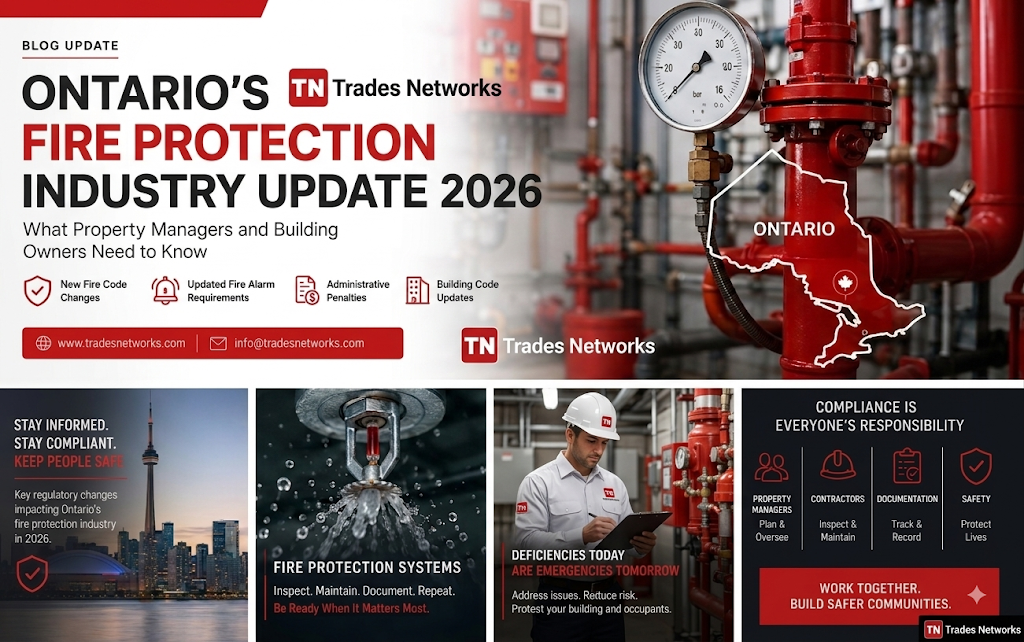
Ontario’s Fire Protection Industry Is Entering a New Regulatory Era.
The Ontario fire-protection industry is experiencing important regulatory changes in 2026. For property managers, building owners, facility managers, and fire-protection contractors, staying informed is no longer simply a best practice—it is an important part of maintaining building safety and compliance.
Several changes to Ontario’s Fire Code took effect on January 1, 2026, while additional changes to the Building Code and enforcement framework are influencing how fire-protection systems are inspected, tested, maintained, and documented.
Here are some of the key developments the industry should be watching.
1. Ontario Fire Code Updates Took Effect in 2026
Ontario Regulation 87/25 introduced significant changes to the Ontario Fire Code, with most of those changes coming into force on January 1, 2026.
The changes include greater harmonization with the 2020 National Fire Code of Canada and updates to requirements involving fire protection, hazardous materials, carbon monoxide protection, life-safety systems, and referenced standards.
For the industry, this means contractors and building representatives should make sure that their inspection, testing, maintenance, and compliance practices reflect the current requirements.
2. Fire Alarm Inspection and Testing Requirements Were Updated
One important 2026 change concerns fire alarm systems.
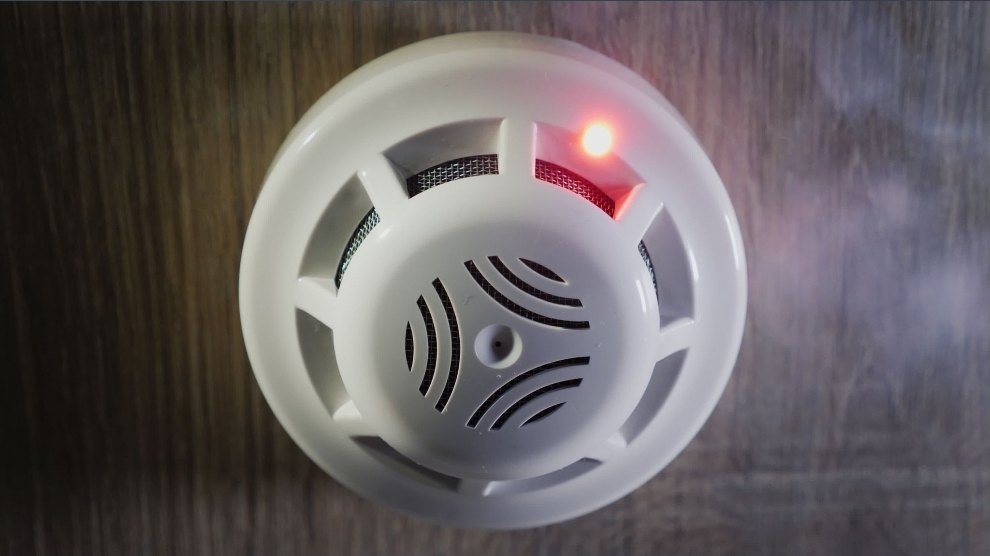
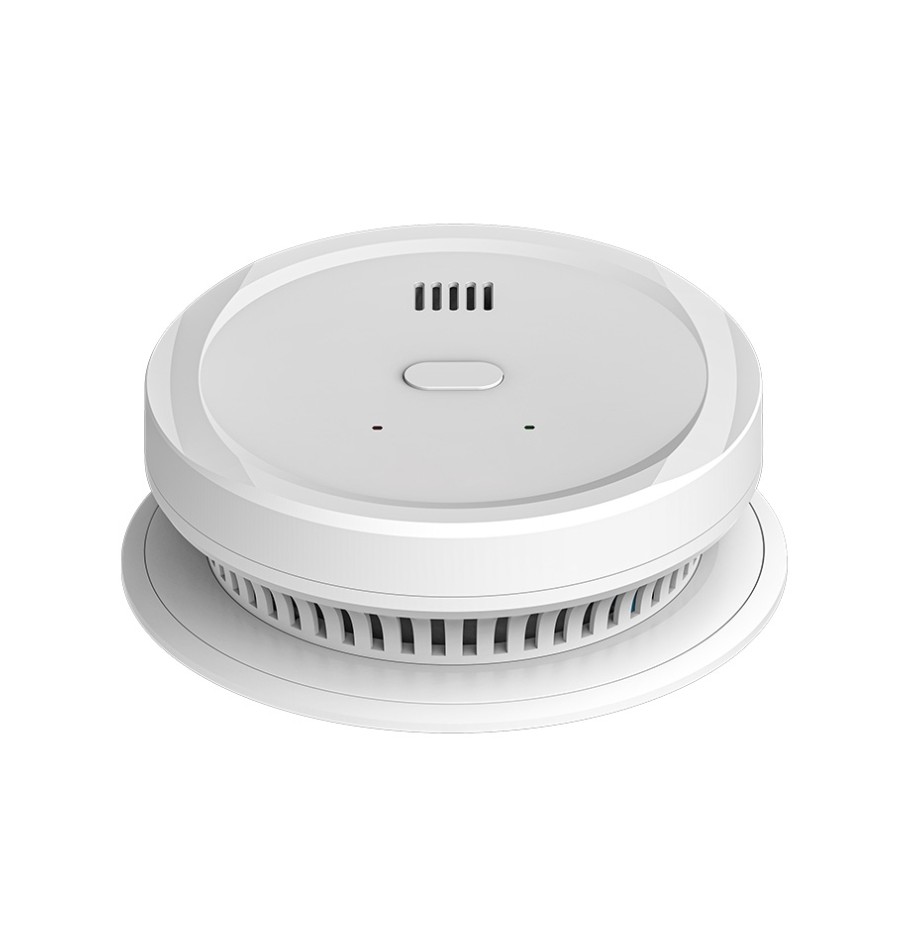
Ontario Regulation 303/25 updated the Fire Code requirements relating to inspection and testing of fire alarm systems. The regulation requires fire alarm systems to be inspected and tested in conformance with CAN/ULC-S536.
It also addresses annual smoke-detector sensitivity testing and requires the description of a fire alarm system to be kept current and maintained at an approved location within the building.
For property managers, this reinforces the importance of keeping inspection records, system documentation, deficiencies, and maintenance information organized and current.
3. Fire Protection Systems Must Remain Operational
Fire protection equipment is not simply something that needs to be inspected once a year.
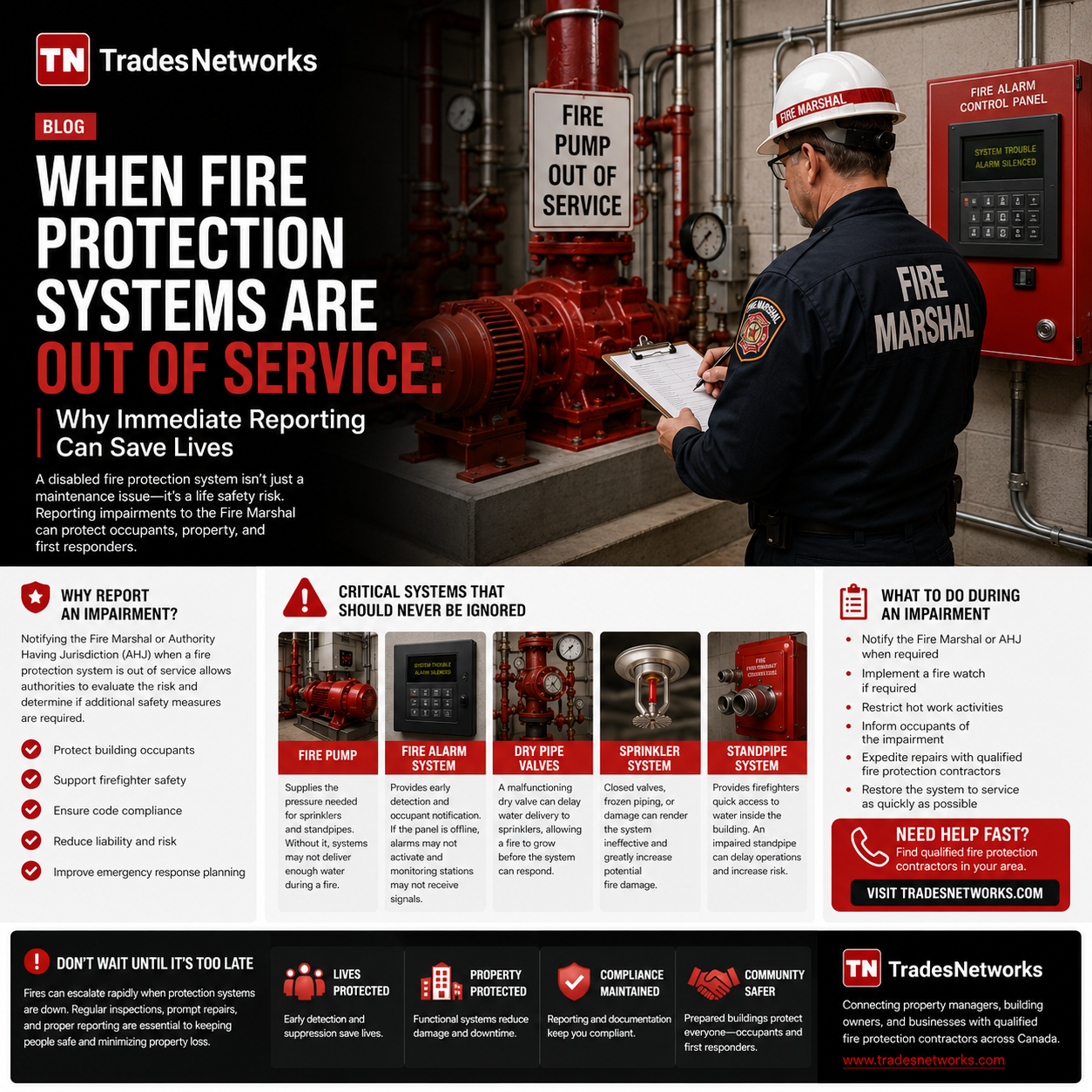
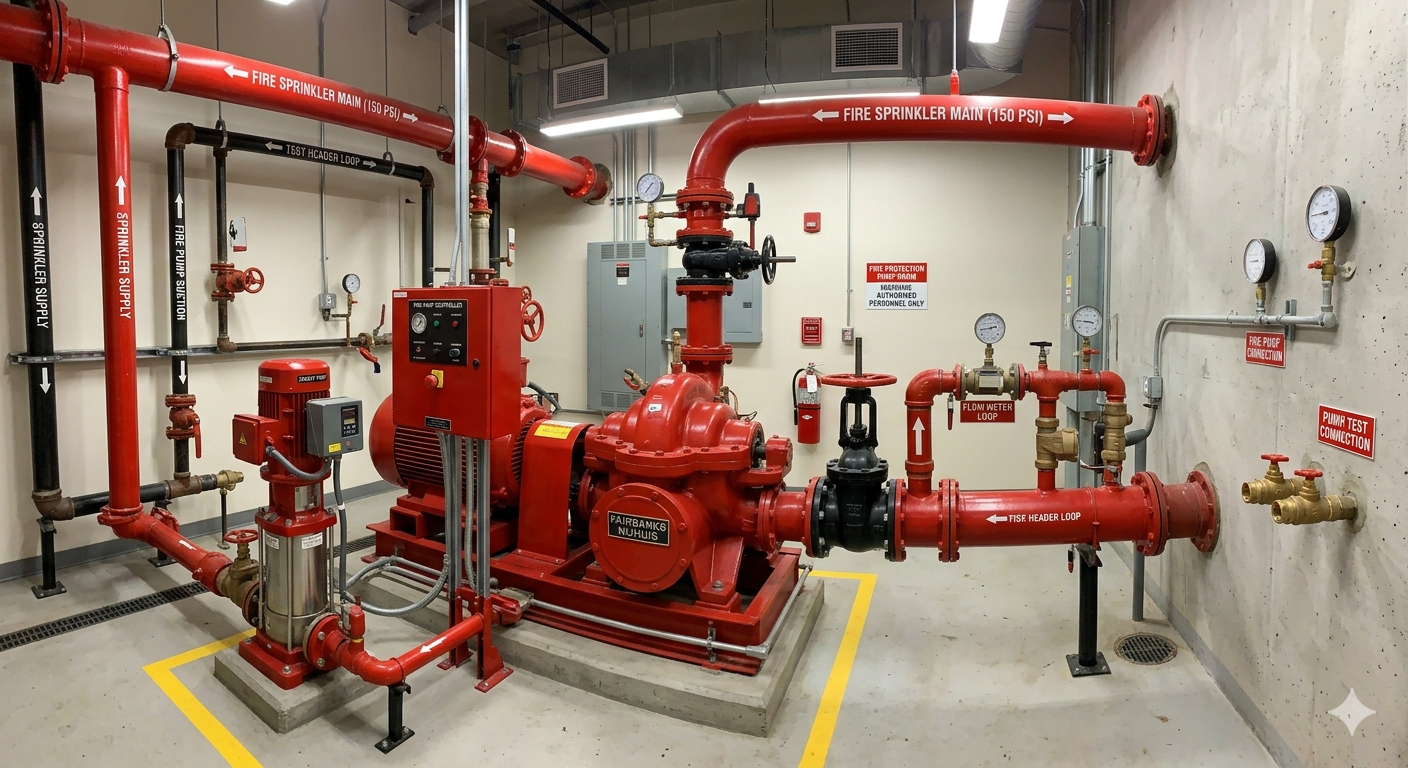
Sprinkler systems, fire alarm systems, pumps, valves, emergency systems, and other life-safety equipment must be maintained so that they can perform when needed.
Ontario's Fire Code states that sprinkler systems shall be maintained in operating condition. The current Code also recognizes compliance with the inspection, testing and maintenance provisions of NFPA 25 as satisfying certain Fire Code requirements for water-based fire-protection systems.
For building owners and property managers, this means that identified deficiencies should not simply be placed on a report and forgotten.
A deficiency can become a serious risk when corrective action is delayed.
4. Administrative Monetary Penalties Are Now Part of the Enforcement Landscape
Another important development for 2026 is the introduction of an administrative monetary penalty framework under Ontario Regulation 260/25.
The framework gives municipalities the option to use administrative monetary penalties for certain contraventions of the Ontario Fire Code.
This is important for property managers because fire-code compliance is not only about avoiding inconvenience during an inspection. Depending on the municipality and applicable circumstances, enforcement options can include financial penalties.
The practical lesson is simple:
Identify deficiencies. Understand their importance. Correct them. Document the corrective action.
5. The Ontario Building Code Has Also Changed
Ontario's 2024 Building Code came into effect January 1, 2025, with the transition period ending for most new permit applications on April 1, 2025.
The current framework adopts the National Building Code of Canada 2020 together with Ontario amendments.
The Building Code is particularly important when buildings are undergoing renovations, alterations, additions, changes of use, or new construction.
Property managers should therefore avoid treating the Fire Code and Building Code as completely separate issues. A building project can involve both building-code and fire-protection considerations.
6. Long-Term Care Fire-Safety Requirements Remain an Important Industry Issue
Ontario previously provided an extended compliance timeline for certain long-term-care homes that had not met sprinkler requirements.
That extension reached July 1, 2026, and the related regulation was revoked on that date.
For organizations responsible for affected buildings, this highlights a broader industry lesson: compliance deadlines can have major operational and financial consequences, and fire-protection upgrades should be planned well before a deadline arrives.
7. What This Means for Property Managers
For property managers, the 2026 regulatory environment creates an opportunity to take a more proactive approach to fire protection.
A strong fire-protection management process should include:
- Keeping inspection and testing schedules up to date.
- Reviewing deficiencies promptly.
- Prioritizing deficiencies that affect life safety or system operation.
- Maintaining current fire alarm and fire-protection documentation.
- Ensuring qualified fire-protection professionals are engaged when work is required.
- Keeping records of completed repairs and corrective actions.
- Planning budgets for repairs, replacements, and major system upgrades.
- Understanding which requirements apply to the specific building and occupancy.
The goal should not simply be to pass the next inspection.
The goal is to keep the building's fire-protection systems ready to perform when they are needed most.
8. What This Means for Fire Protection Contractors
For contractors, regulatory changes create an equally important responsibility.
Companies working in Ontario's fire-protection industry need to stay current with applicable codes, standards, inspection requirements, documentation requirements, and industry practices.
Property managers increasingly need contractors who can do more than provide a price.
They need professionals who can:
Identify → Explain → Quote → Repair → Document
That complete process can help property managers make better decisions about their buildings.
The Bottom Line
Ontario's fire-protection industry is changing.
The 2026 Fire Code updates, updated fire-alarm requirements, administrative penalty framework, and continuing evolution of Ontario's Building Code all reinforce the importance of proactive fire-protection management.
For property managers and building owners, the question should not be:
How do I deal with this deficiency?
It should be:
“How do I make sure my building's fire-protection systems remain safe, compliant, documented, and operational?”
That shift—from reactive maintenance to proactive fire-protection management—can help protect buildings, occupants, and businesses.
Stay Connected With Ontario's Fire Protection Industry.
TradesNetworks is focused on helping property managers connect with fire-protection contractors across Ontario.
Whether a building requires inspection, maintenance, repairs, upgrades, or a larger fire-protection project, having access to qualified contractors can make the process easier to manage.
TradesNetworks
Connecting Ontario property managers with fire-protection contractors.
Website: www.tradesnetworks.com
Support: support@tradesnetworks.com